
NEY
About the Book
Ney (French pronunciation:[now], Persian: Ni; In other languages: nai, nye, nay, gagri tuiduk, karghy tuiduk),is a wind instrument. Mahmud of Kashgar, Divân-ı Lügati't-TürkIn his work about Turkish culture and language,sagoHe stated that it was used in ceremonies called "privates", which were held for "private men" and described death, virtue and pain.
"Ney", meaning anything with a hollow tubeto Persianis a wordto Persian nâornay (reed) took its name.[1] to Persianalso in societywind instrumentsused for almost allmessThe word (meaning windpipe, vocal organ) was also used for ney. In Turkish, almost alwaysneyIt was referred to as.Romania'andhereIt is called.
sumerThe oldest finding we have of this instrument, which is thought to have been used in society since 5000 BC, is the ney, dating back to 3000-2800 BC, and today exhibited at the Philadelphia University Museum in America. It is thought that the instrument was also used in religious ceremonies at that time.
making
PikeIt is made from a type of gnarled reed called . Thisof the reedas a speciesLatinnamearundo donax'truck. It grows in the southeastern, Mediterranean and Aegean regions of Türkiye. In addition, reed reeds are collected from Egypt (around the Nile River), Syria (around the Orontes River) and Northern Cyprus.to its chordsThe ney, which comes in various sizes, consists of nine nodes. It has 7 holes, six at the top and one at the bottom. These holesburnishIt is obtained by drilling with .
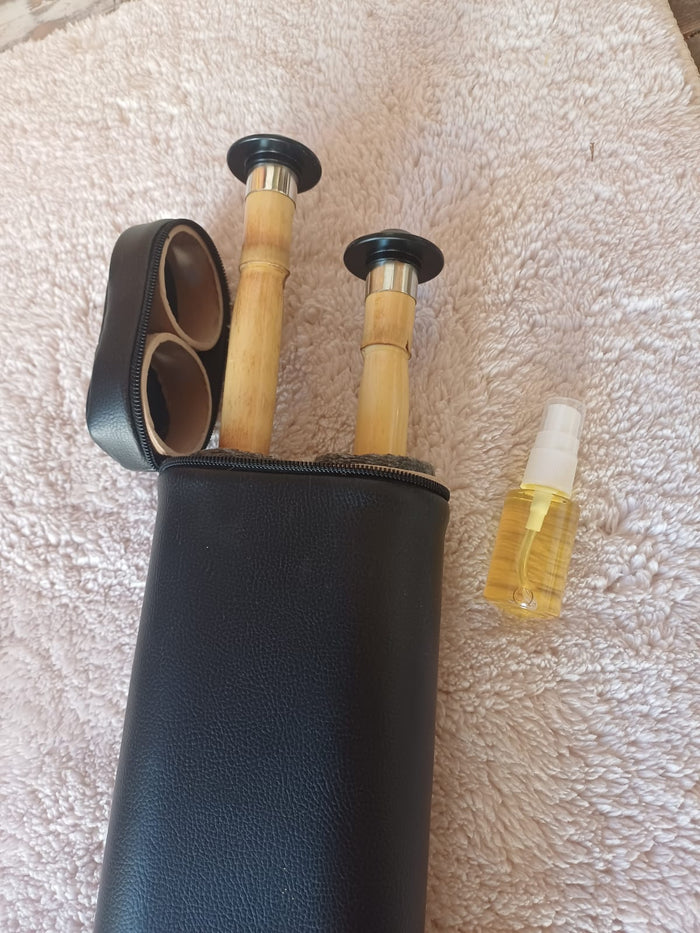
An important part that makes blowing easier has been added to Ne in recent centuries.is the boss. Baspares are made of buffalo horn,ivory, boxsome hardwoods such as and the recently widespreaddelrinIt is made of a type of hard plastic called . Normal plastic on the head pieces of lower quality neys,PVCAlthough materials such as these are also used, four materials are recommended for a professional.
The most important factors that determine the quality of buffalo horn baspare are that the horn is taken from a dead buffalo at the end of its natural life, that its structure is tight enough to avoid cracks and breaks, and that it is carefully prepared in accordance with the measurements and polished correctly.
In order for a reed to be properly tuned, it must have 9 nodes and each of these nodes must be equal to each other. It is very rare to find such a reed in the reeds. For this reason, ney makers adjust the tuning of the ney at the desired frequencies by using a method called shifting while opening the fret holes. The price of something with ideal dimensions is very high and it is very difficult to find it.
Features to look for in a professional quality ney; The reed is yellow in color and densely fibrous, not too thick or thin, and its node widths and lengths decrease proportionally. What is thick or thin affects the deepest sound it can make and the highest pitched sound it can make.
Defender
It is a ring-shaped metal that is attached to the ends of the first nodes of the ney from the bottom and top. Since these are the parts of the reed that are most prone to cracking, they are used to meet the need for protection. Moreoverthe chief pareneThe part that gets into it may cause cracking over time. Because it does not oxidize in the production of parazvanebaboon(alpaca) is used.
Ney in Mesnevi
What does Mesnevi talk about in its first 18 couplets and explains this in the next 6 volumes. Here, a worldview and a civilization are explained under the ney symbol. Being a ney player is also associated with aspiring to learn this world view.
As the length of the ney becomes longer, it becomes more difficult to obtain sound, to control it, and for the fingers to reach the frets easily and move nimbly. For this reason, mid-upper length neys such as mansur or kiz ney are recommended for a person who is just starting out. The person who masters these neys can easily succeed in shorter neys. Today, Shah ney is used as a solo by some master ney players, Davud ney is used very rarely, and Davud-Bolahenk Mabeyni and Bolahenk neys are almost never used. Since classical Ottoman Music performers generally perform in mansur, girl, star and sipürde harmonies, the reeds in these harmonies are the most used.
Ney is an instrument rich in performance possibilities and technically difficult. Obtaining a healthy sound from the ney is the first obstacle that someone new to this instrument will encounter. After choosing to blow right or left depending on personal preference, it is a skill that must be acquired in the first stage for the candidate ney player to find the lip position and blowing angle suitable for his own lip and teeth structure through trial and error and to establish this position in a way that produces a smooth sound. For this reason, we should focus on the neva sound, which is the easiest sound to make from the ney, that is, the lowest sound that can be made when all fingers are open.
Then, the curtains should be gradually closed and the nim hicaz, çargah, segah, kürdi, dügah and rast sounds should be placed towards the pedestal by continuously blowing, making them removable without any errors in any situation. After this stage, the candidate ney player can choose the difficult path and concentrate on the pitches called dem sounds, which become lower pitches from the acem aşiran pitch, or continue blowing by adding high pitches from the neva.
By closing the holes to a certain extent and turning the blowing angle inward or outward, intermediate sounds in the 9-coma system in Turkish Classical Music can be performed.
Performing a piece on the ney becomes meaningful after the technical difficulties, which take an average of two, three or four years to overcome, depending on the person's ability, are eliminated. Because a candidate ney player who has not overcome technical difficulties cannot be expected to be successful in advanced stages such as tone, musicality, nuances and ney attitude. Until this process is over, some easy-to-perform pieces can be studied as etudes.
Ney is a fretless instrument like the violin; In other words, it can produce every frequency in between with breathing and finely tuned movements of the fingers. Those who do not know which frequency to produce with their ears will have difficulty. Since it is a difficult instrument to learn, someone who does not have sufficient knowledge and skills in music must study under the supervision of an instructor.
The sounds in ney are the basic sounds called dem sounds and theirfrom birthis obtained. The holes, also called curtains, indicate the points from which the breath will come out and determine the length of the air column inside the ney. Depending on the blowing intensity, many sounds are produced from the same pitch, in the order of the sounds. In the lightest blowing, first the sound itself or the basic sound, when blown more strongly, its eighth sound, then the fifth sound of the previous sound and finally the eighth sound of the same octave create the most used sounds. When blowing louder than this, all sounds produced will sound like a Pythagorean coma, so it should be blown vertically. Thus, the sound range, which is two and a half octaves from rough raster to high-pitched neva, can be expanded to a point close to three octaves. While performing in the Tampere system, methods such as half-pressing the frets or changing the lip-headpart angle are used.
decorations
What are the unique decorations? Finger decorations called bumps, trills, mordants and scrolls called scrolls.slendervebearingmovements. These scrolls require mastery of blown sounds and harmonious lip-finger harmony. For example, in ney, interrupted blows are performed with the lips in the form of vav-vav rather than with the tongue in the form of tu-tu.
Do not burn
As with many instruments, the sound of the ney gets better as it is played. However, this change in timbral character is very evident in ney. As you blow, the inner part of the reed darkens over time, starting from the first knuckle of the reed, called the sound box. This phenomenon, called burning, is caused by the acid in the ney player's breath penetrating the inner surface of the reed and slightly oxidizing a thin layer. This occurs in a very slow process and usually begins as a small spot approximately 6 months after the ney player starts playing. In the time that passes until this process is completed, that is, until the entire interior of the ney darkens, the sound coming out of the ney becomes increasingly different and acquires an impressive character rich in burnt and harmonics.
Transposition
Ney is a fretless instrument that can produce intermediate sounds. Therefore, in addition to Classical Ottoman Music, the sound systems of many genres such as Western Music, Popular Music, Jazz Music and Folk Music can also be performed. Transposition in the ney is achieved by selecting neys of different sizes according to the harmony (tone) of the piece or by performing the very difficult lip transposition of the ney player. The sound width of the ney, which is 2.5 octaves on average, can go up to 3 octaves depending on the mastery of the ney player.
Developments in recent years
As a result of the use of the ney instrument in Turkish Classical music as well as in Sufi music and the composition of classical music by classical music composers in Sufi music, a search has begun for intermediate notes that cannot be played with the ney. Especially with "Kutb-ün Nayi" Niyazi Sayın, Hisar (E flat), which is a sound that would not be suitable for ney, can now be played.
Camney with mysticism camIt is a work that brings together art. It was held for the first time in Türkiye in 2006.
https://youtu.be/eDl0eP1Kpxg?si=FBT59QenNZ5ahFaj